What's the difference between a chatbot and an AI game master
The short answer
A chatbot replies to what you just typed. An AI game master is responsible for a world that keeps existing between your messages. That means it has to track what is true, remember what happened, enforce the rules of the setting, and still make all of it read like a story. The language model is one part of that job, not the whole of it.
If you have ever tried to run a tabletop-style adventure in a general chat window, you have probably seen the gap. The story starts well, then the innkeeper changes names, your sword vanishes from your inventory, and a character who died in chapter one wanders back into a scene. Nothing is broken in the chatbot. It was never asked to keep a ledger of the world.
A chatbot has a conversation, a game master has a world
In a plain chat, the "state" of your story is just the transcript. Whatever fits in the context window is what the model can see, and everything else is gone. Facts live only as sentences, so a fact can be quietly contradicted by a later sentence and nobody notices.
An AI game master separates the story into different kinds of information. Fabulator splits it into three: Canon (the stable facts of the world, such as factions, history and the rules of magic), State (what is true right now, such as inventory, relationships and who is present), and Memory (a journal of what happened, which fades over time the way a person's recollection does). Each layer has a different owner and a different way of being updated, so a detail about the world does not depend on the model happening to remember it.
The model proposes, the engine decides
The biggest practical difference is who has the final word. In a chatbot, the model's output simply is the truth. In Fabulator, the language model only proposes changes. Say your character tries to pick up a lantern, or an NPC's trust in you shifts. That proposal is checked against the world's schemas, sensible bounds and established canon before anything is committed.
The checks catch the kind of slips that break immersion. A proposal that would flip an ally to an enemy in a single turn, resurrect someone who is dead, or give a character knowledge they could not possibly have can be rejected and regenerated. Only validated changes become part of the world.
Rules are code, not improvisation
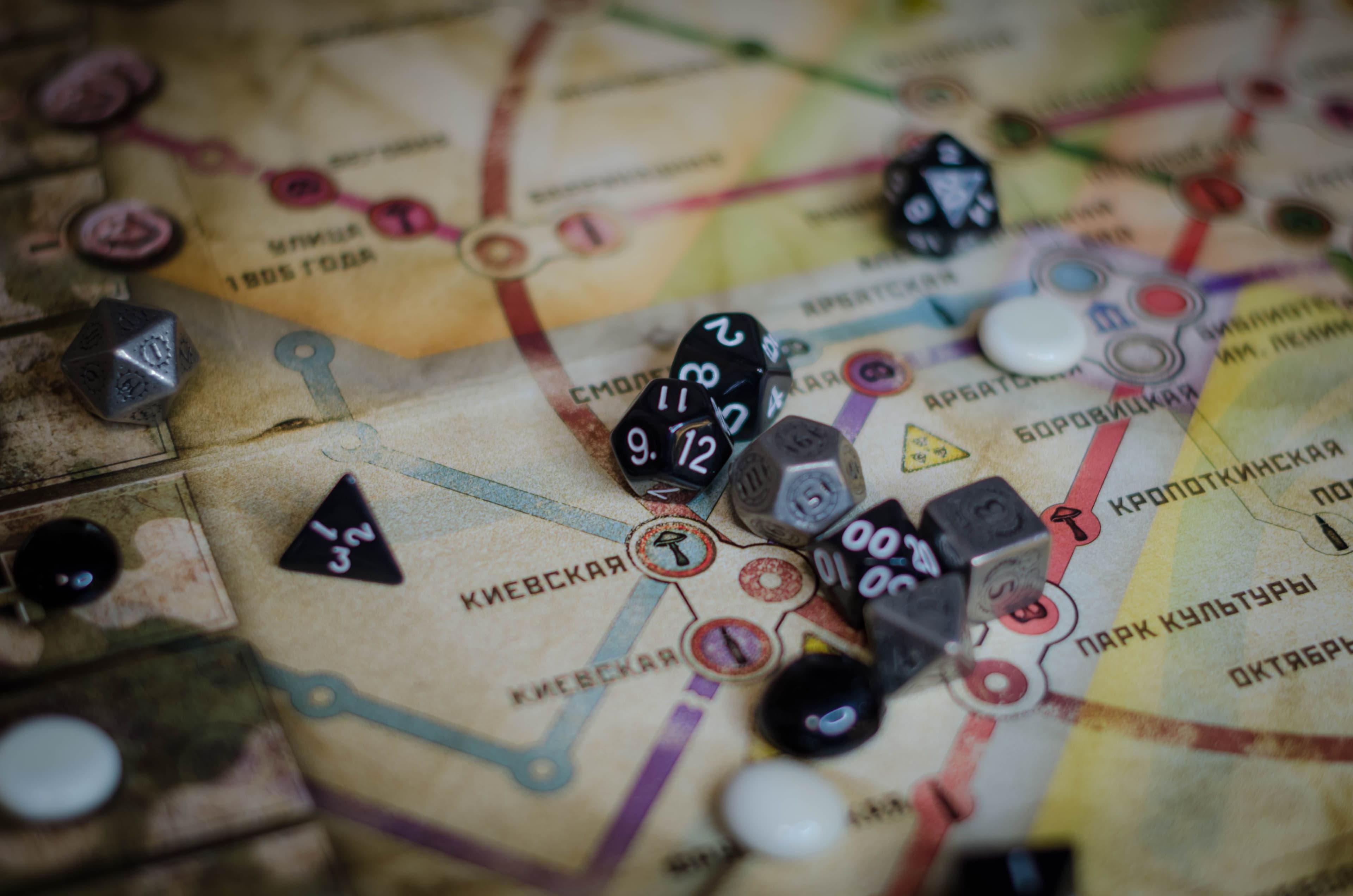
Another thing a chatbot cannot do reliably is arithmetic with consequences. If a story is meant to have dice, difficulty and damage, asking a language model to "roll" invites drift: results that favor the narrative, or numbers that do not add up.
When a world uses a ruleset, Fabulator hands the mechanical part to deterministic code. The system turns your action into a structured request, the ruleset resolves it, and the outcome (the roll, the modifiers, the hit or miss) is given to the narrator as ground truth. The narrator then describes what happened rather than deciding it. If you pick a lock, a real check against your character and the lock's difficulty decides the result. Worlds can also run without a ruleset, in a narrative-first mode where the story decides outcomes more freely.
A pipeline, not a single reply
A chatbot typically does one thing per message: generate text. A game master pipeline separates three jobs. First, work out what the player is actually trying to do. Second, resolve it, using rules where they exist and narrative judgment where they do not. Third, write the prose, then check that the prose does not contradict the outcome or the world. If the narration contradicts established facts, it can be regenerated, and if it keeps failing, the system tells you rather than hiding the problem.
That separation is why a game master can be both creative and consistent. The creative writing happens in one step, and the bookkeeping happens in others.
What this feels like at the table
From the player side, the difference shows up in small, steady ways:
- Characters keep their personalities and their names.
- Items you hold stay held until something in the story changes that.
- The world's rules, like the limits of magic, keep applying.
- Important events stick around, while trivial details can fade.
It also shows up when something goes wrong. A chatbot that loses the thread just continues confidently. A well-built game master is designed to be open about its seams, so you can see what the world currently believes and correct it.
Which one do you want?
A chatbot is the right tool for open-ended conversation, brainstorming or quick role-play where continuity does not matter much. An AI game master is the right tool when you want a persistent world: one with consequences, tracked state and a setting that holds together across many sessions.
If you are curious how this feels in practice, you can browse published World Seeds on the Discover page, pick a setting that appeals to you, and start a campaign to play a few turns. You will notice quickly whether the world remembers its own rules, and that is the clearest answer to the question you started with.