What is a World Seed in an AI-narrated RPG
The short answer
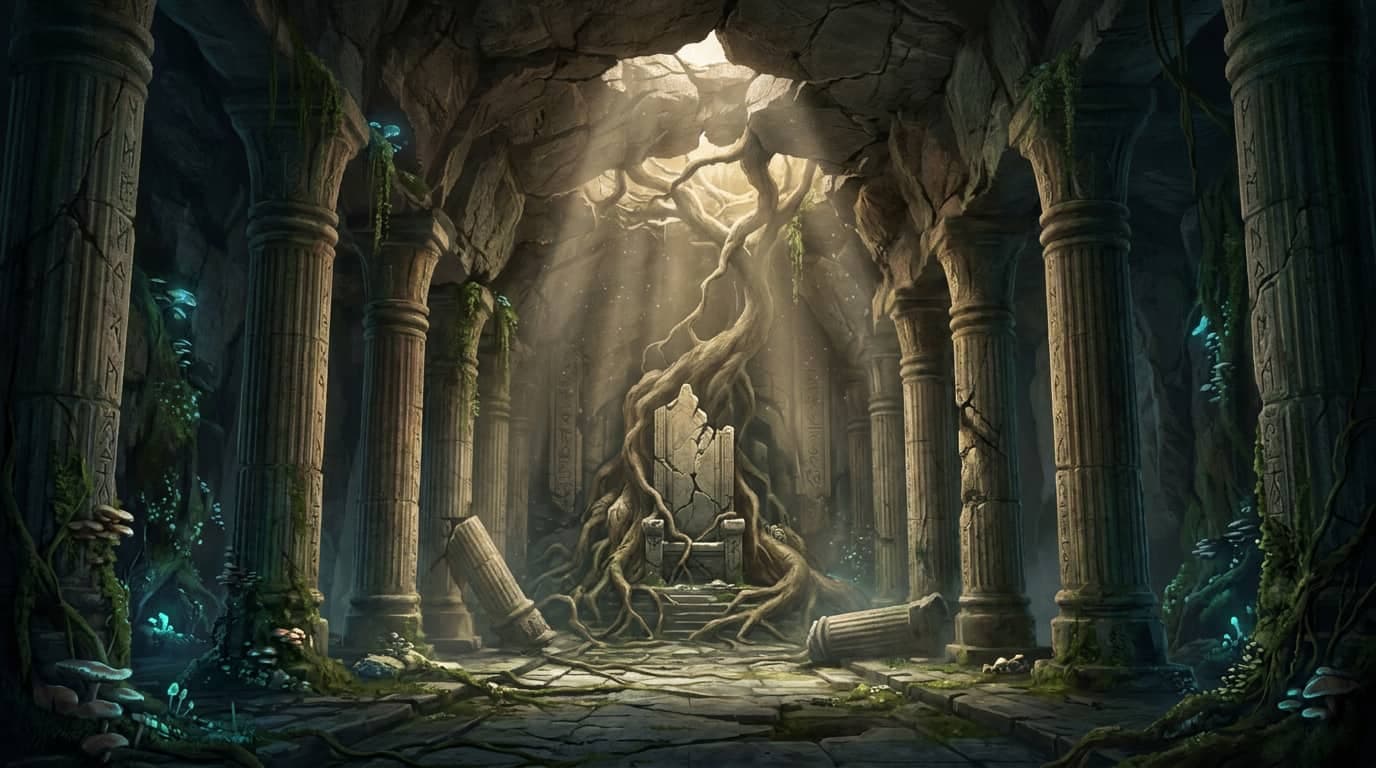
A World Seed is a reusable, packaged setting: the places, factions, rules of magic or technology, items and history that define a world, bundled so that many different players can start their own campaigns inside it. In Fabulator, you do not play inside the Seed itself. When you start a campaign, the platform copies the Seed into your campaign, and from that moment your copy is yours to change.
Think of it as the difference between a published adventure module and your own table's version of it. The module stays on the shelf unchanged. Your table's version picks up scribbled notes, dead NPCs and grudges.
What a World Seed contains
A Seed is made of structured entries called World Cards rather than one long block of lore text. The concept documents describe cards for locations, factions, magic or technology systems, items and spells, historical events, and world rules. A Seed can also carry storylines, which are optional plot structures an AI narrator can follow or ignore.
Because each entry has defined fields (a location has a parent region, a faction has the places it holds influence over), the setting can be queried, linked and checked. That matters for an AI game master. A narrator working from loosely written background text tends to forget or contradict it. A narrator working from structured cards can be given the relevant ones for the scene in front of the player, and the platform can check the narration against them.
Some cards act as hard constraints. A world rule such as "magic requires a physical focus" is stored as an invariant, which means it binds what the narrator is allowed to describe rather than simply suggesting a mood.
What a World Seed leaves out
A Seed deliberately contains no player stats, no history and no campaign-specific memories. It describes the world before anyone has played in it. Your inventory, your relationships, and the record of what you did all belong to your campaign, not to the Seed.
This is why two people can start from the same Seed and have completely different stories, and why nothing one player does can leak into another player's game. Each campaign gets its own copy of the setting, so a village burned down in one campaign still stands in every other.
How a Seed becomes your campaign
When you start a campaign from a Seed, the setting is cloned from the platform's registry into your campaign's own canon. The platform's design documents call this cloning, or forking. After the clone, your campaign's canon can be edited without touching the original, and that is where the three layers of a game come apart:
- Canon is the stable world, copied from the Seed and changed only on purpose or by what play establishes.
- State is what is true right now: where you are, what you carry, how an NPC currently feels about you.
- Memory is the running record of what happened, which fades in detail over time.
The Seed is the starting point for the first layer only. Everything else is generated by play.
Where World Seeds come from
World Seeds are made by Authors, the people who build and publish settings for others to play. A Seed has to go through a moderation step before it can be published, and published Seeds that carry mature-content advisory tags are hidden from anyone who is not signed in with a verified account. Players can browse what has been published on the Discover page, and each Seed shows a public author name rather than an email address.
Authors can also use the Creator SDK when a world needs custom mechanics, which run as sandboxed WebAssembly modules instead of arbitrary code. Narrative settings, on the other hand, need no code at all.
Why the format matters
Packaging a setting this way solves a few problems that come up again and again in AI-narrated games:
- Consistency. The world is written down in a form the system can check, so the narrator is less likely to contradict established history.
- Portability. A setting can be shared, cloned and reused without dragging along one player's private story.
- Replayability. The same Seed can host a structured storyline or a pure sandbox, since storylines load as optional modules that can be switched on or off when a campaign starts.
- Authorship. Someone who has never touched a game engine can still publish a world, because a Seed is content, not software.
Common questions
Is a World Seed the same as a campaign? No. A Seed is the template, and a campaign is one playthrough with its own state and memory.
Can I change the world once I am playing? Yes, in your copy. Lore invented during play can be folded into your campaign's canon, and you can accept, edit or discard those additions afterward without leaving the story.
Do I need to write anything to play one? No. You pick a Seed and start playing.
Try one
If you are curious what a World Seed feels like from the inside, the quickest way to find out is to open a campaign in one. You can browse published Seeds on the Discover page, pick a setting that appeals to you, and start a campaign from it whenever you are ready. There is no wrong place to start, and you can always come back and try a different one.