 Fabulator
Planning your next move from your location trail

Between sessions it is easy to lose the thread of where you were. You remember the argument at the inn and the unfinished errand, but not whether the inn was in the harbour district or the old town. Fabulator keeps that answer for you. This post is a set of habits for using it to decide what to do next.
One note first, so expectations are right: during play Fabulator does not currently show a drawn map of the world. What you get is a location trail, the lore behind it, and an on-demand picture of the place. Used together, those cover most of what a map would.
Read the trail before you act
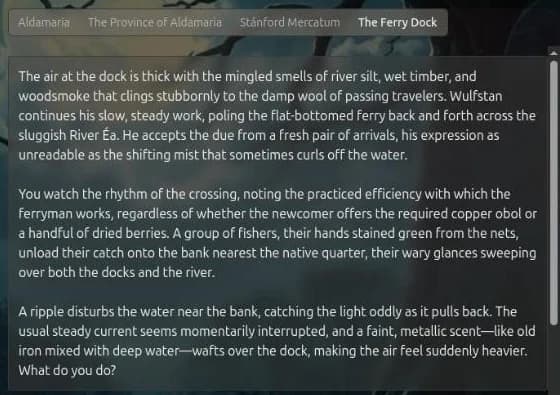
At the top of the story panel sits a line of place names separated by arrows, ending, emphasised, at your current spot. It runs from the broad region down to the room or street you are standing in, and every level is shown rather than shortened.
Your location is not something the narrator remembers in prose. The platform stores it as a tracked pointer into the world's location hierarchy, and it rebuilds the trail from that pointer each turn. That is why the trail is reliable when a long scene has made your surroundings blurry: it cannot drift the way a detail buried in older text can.
A thirty-second habit helps: when you sit down to play, read the trail aloud before typing anything. It tells you which parts of the world are in play, and which ones are not.
Use the levels as a planning tool
Each segment of the trail is a scale you can plan at.
- The last segment is where your next action happens. If you want to talk to someone, search a room or leave through a door, this is the level.
- The middle segments are the places you can plausibly reach without a long journey: the rest of the building, the neighbouring street, another part of the same district.
- The first segments tell you which larger area you are in, and so which factions and customs are likely to matter.
Before a move, ask which level your goal sits at. A goal on the same level as your current spot needs an action. A goal one level up needs you to leave and come back. A goal in another branch of the trail needs a proper journey, and probably a reason.
Name places the way the game names them
When you travel, the platform checks whether the destination you mean matches a known place. Names the game has already used are the safest handles, so copy them from the trail or from the narration. "Head to the Sunken Shrine" is easier to resolve than "go back to that creepy place".
If the destination cannot be matched, your tracked location simply stays where it was. That keeps things consistent, but it can leave the prose and the trail briefly out of step. If the trail does not move after you thought you had travelled, say the place's name plainly in your next action.
Check the lore when the trail raises a question
The trail tells you where you are. The Context Manager, reached from the Canon and Memory panel, tells you what is known about it. In Player Mode it shows the facts and memories attached to your own campaign, so you can check what the world has established about a place before you commit to a plan.
Some quick questions worth asking there:
- What has already happened at this place, and who was present?
- Which factions or characters are tied to it?
- Does anything recorded here contradict the plan I was about to make?
Doing this once at the start of a session usually saves several turns of guessing.
Ask for a picture when the geography is unclear
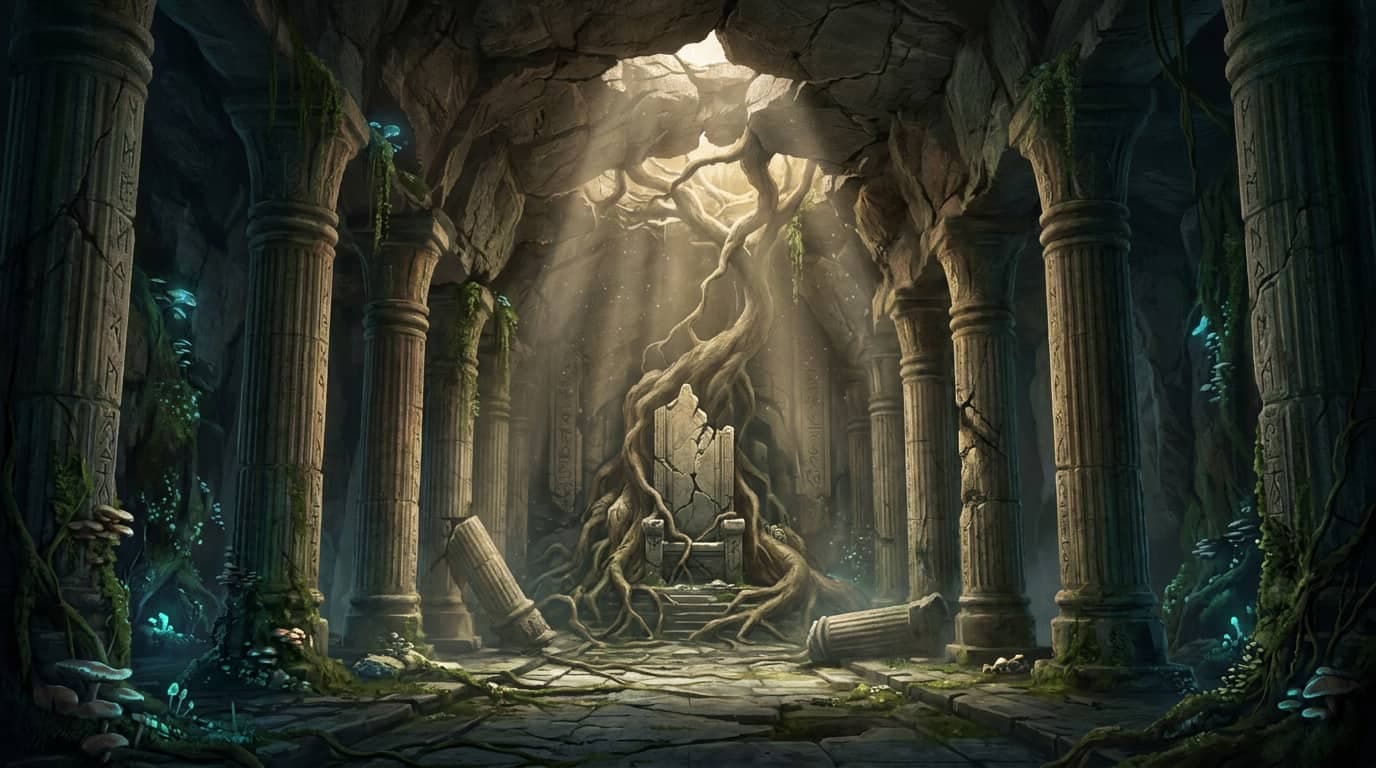
The game screen has a location image panel. It is on demand: it shows a placeholder with a button, and generates an establishing picture of the current place only when you ask. If a description of a courtyard or a canal junction has left you unable to picture the layout, ask for the image, then describe your next action in terms of what you can now see.
Turn what you learn into a short plan
Combine the pieces into a small routine at the start of a session:
- Read the trail and note the level your goal sits at.
- Open the lore for your current place and skim for anything unresolved.
- Choose one concrete destination and name it exactly.
- Write your first action as a single clear step toward it.
That is about two minutes, and it tends to produce sessions that go somewhere rather than circling the same room.
Back to the story
If you have a campaign you set down part-way through, open it and read the trail first. Chances are the next move is already obvious from where you are standing. Pick the destination, say its name, and carry on.
Play an AI-narrated story of your own
Fabulator is an AI game master that tracks your characters, places and choices. Pick a published World Seed and play, or author your own.