
A World Seed worth trying next: Aldamaria
A setting with a disagreement built in
If you have a few campaigns behind you and want something with more pull than a generic fantasy backdrop, Aldamaria is worth a look. Fabulator's documentation describes it as the flagship seed world: a large island under occupation by the Tyrian Empire, a Roman-inspired power, in standing tension with its native highland clans.
Everything below comes from that lore documentation. It describes the setting, not the mechanics, and which details surface in any one campaign depends on the story you tell. Look for Aldamaria on the Discover page, and if you see it, here is how to make a first visit count.
Start at the ford
Every newcomer to Stánford Mercatum arrives the same way: by river, at the ferryman's dock. Old Wulfstan collects the crossing fee, tells you the ford's name and offers one piece of advice: mind the stones in the market, and do not touch the standing stones after dark.
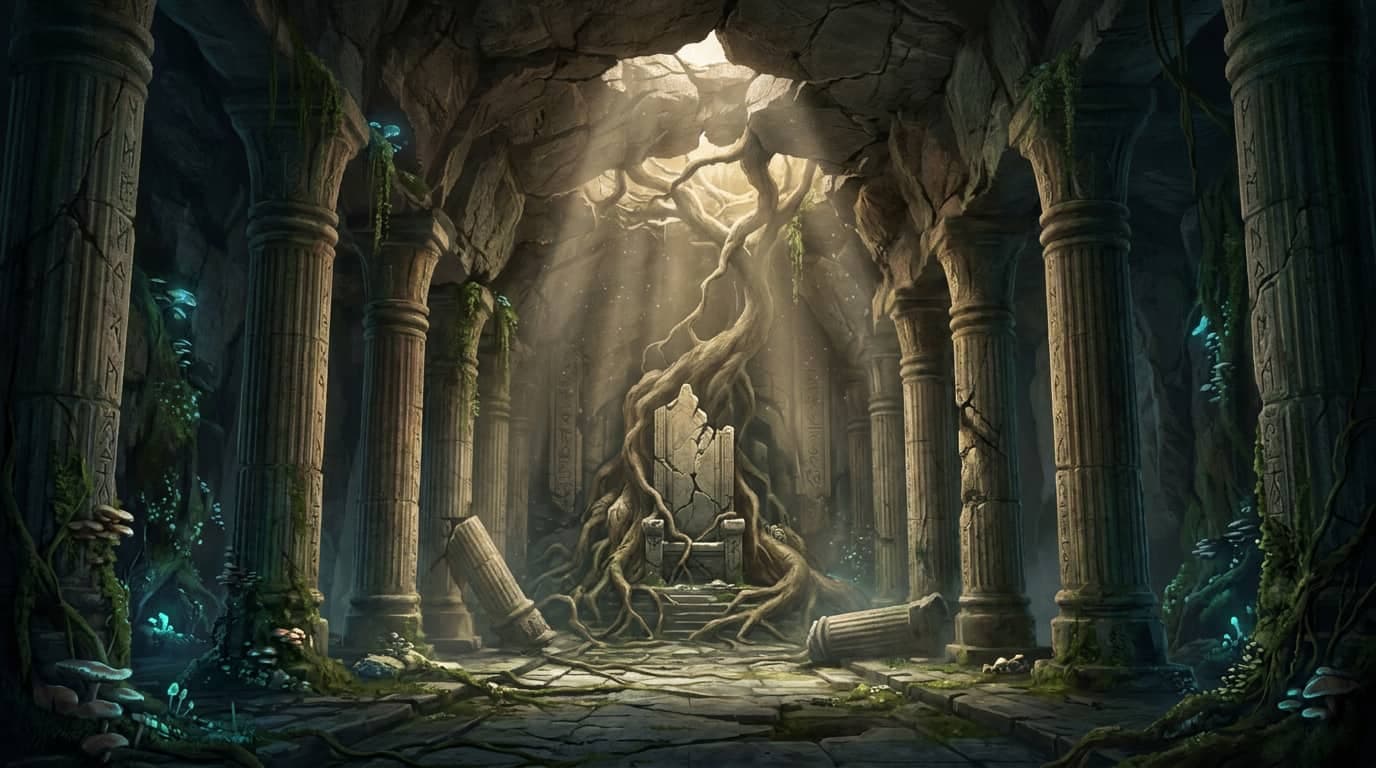
Stánford exists by treaty, one of the few formal agreements between the Empire and the clans. Each side keeps a small garrison, no more than forty soldiers by agreement, and each watches the other. The market is held on neutral ground between seven ancient granite pillars. A council of three arbitrates disputes: a Tyrian magistrate, a native elder and an elected merchant. The lore itself notes that the arrangement pleases no one entirely, which suggests it may be fair.
The settlement is split into a Tyrian quarter, a native quarter and a riverside community of people who belong to neither side entirely. That is a lot of social geography packed into one place, and all of it can be talked to.
Tip one: choose your origin on purpose
Aldamaria describes three cultural identities, and the documentation says plainly that cultural identity is not cosmetic here. It shapes your starting relationships, legal status and the assumptions every stranger brings to meeting you.
Tyrian-Born characters carry the Empire with them. Aldamarian-Born characters know the land and the old names, and know what occupation means. Frontier-Born characters, called Mearchfolc, come from the border itself and begin in the most precarious position, trusted fully by neither side but not automatically suspected by either.
If you have been defaulting to the same kind of character, this is a good place to break the habit. Play a second campaign with a different origin and the same town will feel like a different place.
Tip two: talk to the people who know things
The lore is generous with NPCs who have a stake and a secret.
Mara runs the only tavern, where both peoples drink at separate ends of the room. She answers direct questions plainly and without volunteering more than you ask, which makes her the settlement's most accessible source of honest information.
Fionnán the Grey is an aging druid who watches the standing stones and, in the lore's words, knows what sleeps beneath them. The Tyrian magistrate, Marcus Severius Tacitus, struggles with cases that fit no legal precedent. The station-keeper, Cornelia, speaks the highland dialect and knows more than she tells the military.
Ask a question of each and compare the answers. The most interesting thing in Stánford is how differently each person describes the same situation.
Tip three: pick up an open thread
Aldamaria's lore lists tensions that are explicitly unresolved, which is what makes them good hooks for a campaign.
The Barrow Question: a burial mound north of town that Tyrian surveyors want to map and native elders insist must not be disturbed.
The Iron Trade: weapons are officially forbidden, but iron tools can be reforged into spearheads, and one garrison commander suspects several merchants.
The Restless Dead: travellers on the north road have vanished, and one body found was long dead despite being identified as a merchant who left a week earlier.
You can pursue one, play two against each other, or ignore all of them and see how the world moves without you.
Tip four: look at the details that carry meaning
Aldamaria rewards attention to small things.
Money is three things in uneasy coexistence: Imperial coin, an emergency provincial token that everyone knows is an IOU, and a native value system based on obligation measured in cattle. Paying in Imperial coin is described as a Tyrian act, and refusing it as a political statement.
Magic has costs. Tyrian magic weakens on the island because the land resists it, while native attunement to the old Powers changes the practitioner. The Deep Ones, for example, always want something drowned. If you play a spellcaster, the setting is built so that power is a trade, not a free tool.
Time has texture as well. The Imperial calendar runs a twelve-day week, and the lore ties the market to one day and notes that few natives will strike a new bargain on another. Try arriving on market day and again on a quiet one.
Go back in
If a campaign has gone stale, you do not have to abandon it. Open it and take one step toward something you have not touched: ask Mara who she is worried about, sit at the Speaking Stone, or follow a rumour north. If you would rather start fresh, a second campaign as a different origin is the quickest way to see the same town through new eyes.
The ford is waiting, and the market opens on Mercurath.